Posts

Showing posts with the label Sadhana

Yoginis' Walk - August 2023

Image

Detox by Isha Foundation

Image
From improving mental clarity and boosting energy levels to gaining emotional balance and turning inward, detoxing the body is a sure-shot way to achieve all this and more. Here are three excellent ways to restore your body’s systemic efficiency, which will help establish better health and act as a stepping stone on your spiritual journey. Source

Music of 2022

Image
 

Quote of the day

Image
Yoga is not just about living better. It's about exploring the very Source of Life. - Sadhguru   

Vayu mudra

Image
sangitasyogasutra: Gas, bloating and arthritis are part of vata imbalance. This means we need to regulate the air element in the body. Our index finger represents the air element and thumb represents 🔥 fire. So with Vayu mudra - you can lower and reduce the air element in your body by pressing the index finger to the base of the thumb and covering it with thumb as shown in picture. It is also great for improving your immunity apart from helping digestion and arthritis. If you feel bloated or experience gastric, you can try this simple mudra for a few minutes and feel relief immediately. Note: Practice it regularly for 10-15 minutes atleast to relieve chronic issues. For best results try practicing it in meditative pose like sukhasana/ vajrasana/ padmasana- keeping spine erect. Always practice mudras after 2-3 hrs of main meals. It is best done on empty stomach. Practice it in combination with pranayam and meditation. Source View this post on Instagram A post shared...

5 exercises for pelvic floor strength

Image
Reel By @carolinepackarddpt View this post on Instagram A post shared by Yoga Daily Community (@yogadailycommunity) Whether you’re looking to create pelvic strength before pregnancy, during pregnancy, or postpartum- the methods are virtually the same. Creating pelvic floor strength = exhale & lift from the pelvic floor (I like to cue lift from the lower core to help assist a pelvic floor contraction as most don’t get the “lift” portion )+ wrap the deep core (transverse abdominis) during THESE 👆🏻 exercises and any others for that matter. Another reason why the #kegelexercise is lowest on the totem pole for focusing your rehab, most people only squeeze with no lift. A cue to lift from the lower core (between the pubic bone) will help initiate a pelvic floor contraction. 👉🏻it’s inefficient 👉🏻it doesn’t connect your pelvic floor function to real life movements 👉🏻the pelvic floor doesn’t work in isolation, so why would you only train it in isolation movemen...

10-min morning stretch

  View this post on Instagram A post shared by Yoga Tips Channel (@yoga.tips.channel) All you need is 10 minutes in morning 🌞  5 exercises, 30 seconds each. 

Create a Vata-balancing Daily Routine

Image
Establishing a supportive daily routine is a crucial part of the Ayurvedic lifestyle, but it is particularly essential when vata is provoked. Our physiology is very much adapted to—and supported by—a sense of routine. Vata is highly mobile and active, so when it is elevated, we are very likely over-committed, stressed-out, and exhausted. Our bodies may feel fragile and run down, our minds flighty and ungrounded. And as much as we may resist it, a sense of routine is potent medicine for balancing vata because it creates a number of anchor points throughout the day that serve to ground one’s energy, calm the nervous system, and disrupt the self-perpetuating cycles of stress and busy-ness that have become the norm for so many of us. It’s important to note that following an Ayurvedic daily routine does not mean that you should schedule every moment of every day. Instead, it’s about creating consistency with a handful of habits that are repeated each day at similar times. This invites the ...

Morning routine for Vata

Your Morning Routine The first step in creating a morning routine is to choose a consistent time to wake up. Because rest is essential, please give yourself permission to sleep later than you normally might if your schedule requires you to stay up late, or if your bedtime routine is disrupted for some reason. Otherwise, vata does best to awaken in time to take full advantage of the peaceful stillness surrounding dawn—ideally around 6 or 7 a.m. Morning Hygiene Upon waking, it is best to begin the day by taking care of your personal hygiene. We’ve included the most vata-pacifying Ayurvedic hygiene practices below. But remember, you do not have to commit to doing all of them. Eliminate. Ayurveda recommends that we eliminate upon waking every day. If you are not already in the habit of having a bowel movement first thing each morning, simply relaxing on the toilet for a few minutes can encourage the body to develop a sense of regularity. Cleaning the tongue and drinking warm water (see be...

Evening routine for Vata

Image
Your Evening Routine Where vata is concerned, getting adequate rest is exquisitely important, so focusing on your evening habits is always a useful starting point. And in truth, a successful daily routine begins the night before. Choosing to be intentional about the flow of your evening ensures that you are grounded at the end of your day, that you get enough rest, and that you sleep as soundly as possible. Create an Evening Self-Care Ritual A sense of routine can be built around even the most mundane aspects of the day. What makes a routine distinct is that we do it consistently and use it as a means of reminding our bodies that all is well, that we are safe, and that we can relax. To this end, take a few minutes to pamper yourself before bed. Doing so has the potential to bolster your sense of well-being, and will likely improve the quality of your sleep as well. Your evening ritual need not be complicated. In fact, it will most likely consist of hygiene and self-care practices that ...

How much water should I have?

Image
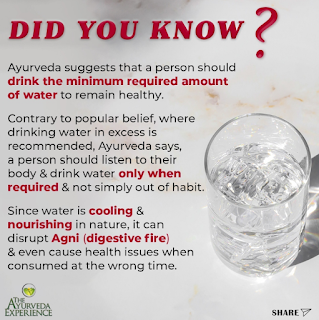
Water... such a basic thing and yet so complicated! As easy drinking a glass of water sounds, its after-effects on our health are complex. ⁠ ⁠ 'Drink water in excess' - We hear it quite often on social media! But Ayurveda says something different. ⁠ Though known as 'Elixir' as per Ayurveda, it suggests drinking the minimum required amount of water to remain healthy. Why? ⁠ Water in general has cooling and nourishing properties, which if consumed more than required can extinguish our digestive fire or agni. It basically controls our metabolism and if the metabolism is disrupted, one can face several digestive and health issues. ⁠ So, what should be the ideal daily water intake?⁠ As per Ayurveda, daily water intake cannot be generalized or be the same for everyone. People have different body compositions, types, and dosha while some may have health conditions — and so the daily water intake differs from person to person. Source View this post on Instagram ...

Saturday Menu

Image
Besan Chilla Recipe: Weight-Loss Friendly Breakfast On The Planet Easy & Healthy Dhokla Recipe For An Anytime-Snack Coconut Chutney Recipe: A Vata & Pitta Pacifying Comfort Food Indian Rice Pudding (Kheer): An Easy Ayurvedic Recipe Khichdi Recipe: The Quintessential Ayurvedic Detox Meal Source Ayurvedic recipes @  https://www.ayurvedum.com/category/ayurveda-food-diet-recipes/

Emotions and their qualities

Image
All of Ayurveda is based on one simple truth - anything you consume has a quality and that affects the state of your body.⁣⁣ Just as chillies are hot and can leave your gut Hot, so can a hot emotion.⁣⁣ ⁣⁣ Any emotion your body consumes has the potential to alter your body’s state. When an emotion becomes chronic or persistent - that alteration can become permanent and serious. ⁣⁣ ⁣⁣ A person with chronic anger will often display gut issues related to heat and anxiety and stress will lead to more IBS type of issues. Depression can lead to sluggishness and lack of desire to do anything. ⁣⁣ ⁣⁣ The chart above is not perfect but is an interesting place to start.⁣⁣ ⁣⁣ Also, being warm blooded, the most ideal environment for your body is warm and moist. You do the math! ⁣⁣ Just some food for thought!⁣⁣ Source View this post on Instagram A post shared by Nidhi Pandya Bhanshali (@my_ayurvedic_life)

Core workout

Image
No equipment needed Source  View this post on Instagram A post shared by Tania (@peacockpilateslondon)

5 Ayurvedic tip on staying healthy when you hit 40

Image
Hitting 40 is a bigger milestone than you realise.  Many biological changes start to happen. It's a Pitta phase of life progressing slowly to Vata phase. From your metabolism to hormones, skin and hair; all organs start to show signs of natural ageing. It's extremely important to start taking care of your health! Have an early start Nothing beats the feeling of freshness from an early start Those quiet moments before a busy day can help your nervous system to cope well with stress Have a routine that is soothing to your mind and energising for your body! Exercise on empty stomach! Exercising on empty stomach aids in laghutva (lightness) and doesn't interact with other physiological processes Aim to exercise early in the morning for at least 30 min to 1 hr regularly. Eat less and move more! This's the best rule to maintain your metabolism after 40 Ayurveda recommends that you leave the plate once you're 3/4th full Keep moving throughout the day and don't sleep in...

What is Sadhana?

Image
Sādhanā is a Sanskrit term used to refer to a daily practice that enables us to be present with ourselves, in body, mind, and spirit.  Sādhanā also incorporates the element of routine or repetition, something we do for ourselves on a regular basis with awareness, discipline and the intention of supporting our own growth. In this way any intentional routine or regular practice can be considered our sādhanā. The ancient philosophers and healers who developed the concurrent systems of Ayurveda and Yoga were really onto something! In both these wellness systems there is an inherent focus on regular practice that benefits the self. Western medical research has come to the same conclusion as we notice the immense benefits of routines, especially in improving mental health. Routines can help our stress levels fall, we tend to sleep better, and our overall physical health improves too - which many people credit as helping them feel happier as a result - and all these benefits apply to our ...